
The Ultimate Mexico Nearshoring Checklist: From Planning to Production
Moving manufacturing closer to North America is no longer just a way to reduce shipping times—it’s a strategic decision that can improve supply chain resilience, increase operational flexibility, and strengthen customer service. As more companies evaluate production outside Asia, Mexico continues to stand out as one of the most attractive manufacturing destinations.
However, successful nearshoring doesn’t happen simply by selecting a factory and placing an order. Companies that see the best results follow a structured process that covers supplier selection, logistics, production planning, quality management, and continuous improvement.
If you’re wondering how to start nearshoring in Mexico, this guide provides a practical Mexico nearshoring checklist that walks you through each stage—from early planning to full-scale production. Whether you’re relocating an existing product line or launching a new manufacturing program, these steps can help reduce risk and create a smoother transition.
What Is Nearshoring?
Nearshoring is the practice of moving manufacturing or business operations to a nearby country instead of producing goods in a distant market. For U.S. and Canadian companies, nearshore manufacturing in Mexico offers shorter transportation routes, easier communication, and greater supply chain flexibility than many offshore locations.
Unlike simply changing suppliers, nearshoring often involves redesigning your entire manufacturing strategy to improve cost, quality, and responsiveness.
Why Planning Matters Before Moving Production
One of the biggest misconceptions about nearshoring is that the hardest part is finding a manufacturer. In reality, supplier selection is only one piece of the puzzle.
Successful projects begin with careful planning.
Before production starts, companies should understand:
- Product requirements
- Supplier capabilities
- Logistics options
- Regulatory requirements
- Production capacity
- Inventory strategy
- Quality expectations
Taking time to answer these questions early prevents expensive surprises later.
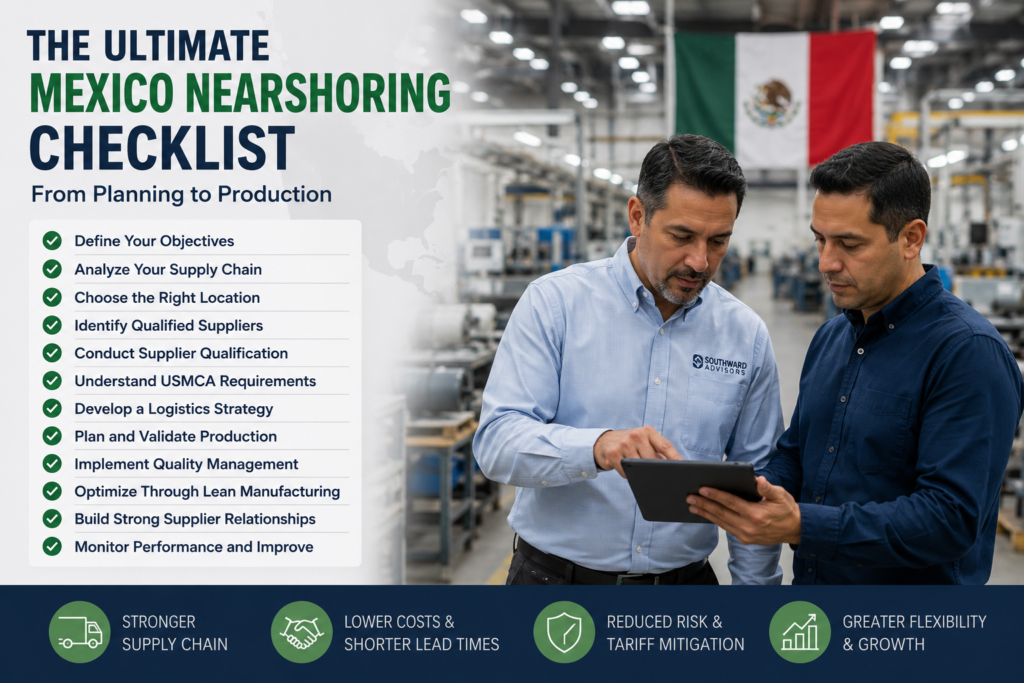
The Ultimate Mexico Nearshoring Checklist
Use this checklist as a roadmap for building a successful manufacturing operation in Mexico.
Step 1: Define Your Business Objectives
Start by identifying why you’re considering nearshoring.
Your goals might include:
- Reducing lead times
- Lowering freight costs
- Diversifying suppliers
- Improving customer service
- Increasing production flexibility
- Reducing tariff exposure
- Supporting future growth
Having clear objectives makes it easier to evaluate suppliers and measure project success.
Questions to Ask
- Which products should move first?
- What production volume is required?
- What lead time improvements do we expect?
- Which costs are we trying to reduce?
Step 2: Analyze Your Current Supply Chain
Before relocating production, understand how your existing supply chain operates.
Review:
- Current suppliers
- Bill of Materials (BOM)
- Component sourcing
- Transportation routes
- Inventory levels
- Production bottlenecks
- Customer delivery requirements
Many businesses discover opportunities for improvement before production even moves
Step 3: Choose the Right Manufacturing Region
Mexico offers several well-established manufacturing hubs, each with different strengths.
For example:
- Northern Mexico for cross-border logistics
- Central Mexico for automotive and industrial manufacturing
- Western Mexico for electronics and technology
Your ideal location depends on factors such as supplier availability, labor skills, customer proximity, and transportation infrastructure.
Selecting the right region is one of the most important decisions in your Mexico manufacturing setup.
Step 4: Identify Qualified Suppliers
Finding suppliers is easy.
Finding the right suppliers takes experience.
Instead of requesting quotes from dozens of factories, create a structured evaluation process.
Consider:
- Manufacturing capabilities
- Equipment
- Capacity
- Export experience
- Quality systems
- Financial stability
- Engineering support
- Communication
Working with an experienced Mexico sourcing agent can simplify this process by identifying suppliers that match your technical and operational requirements.
Step 5: Conduct Supplier Qualification
Never rely solely on brochures or online profiles.
Supplier qualification should include:
- Factory visits
- Process reviews
- Equipment assessments
- Production capacity verification
- Quality system evaluations
- Customer references when available
This step helps ensure suppliers can consistently meet production expectations.
Step 6: Understand USMCA and Regulatory Requirements
Many companies choose Mexico because of the benefits available through the United States-Mexico-Canada Agreement (USMCA).
However, qualifying for these benefits requires understanding:
- Rules of origin
- Documentation requirements
- Customs procedures
- Import and export regulations
Work closely with customs specialists and legal advisors to ensure compliance before production begins.
Step 7: Develop a Logistics Strategy
Manufacturing doesn’t stop at the factory door.
An effective logistics plan should address:
- Transportation providers
- Border crossings
- Customs brokers
- Warehousing
- Inventory replenishment
- Delivery schedules
Efficient logistics reduce delays while improving customer service.
Step 8: Plan Production Carefully
Launching production without preparation often leads to unnecessary disruptions.
Before approving full production:
- Validate tooling
- Confirm material availability
- Test production processes
- Verify work instructions
- Review inspection procedures
Pilot production helps identify problems before they affect customers.
Step 9: Implement Quality Management Systems
Quality should be built into the production process rather than inspected afterward.
Establish:
- Incoming material inspections
- In-process quality checks
- Final inspections
- Corrective action procedures
- Supplier performance reviews
Regular communication between engineering teams and suppliers helps maintain consistent quality over time.
Step 10: Optimize Production Through Lean Manufacturing
Once production is stable, focus on continuous improvement.
Lean manufacturing techniques can improve:
- Production flow
- Changeover times
- Material movement
- Inventory levels
- Space utilization
- Labor productivity
Many companies also work with process improvement consulting specialists to identify additional opportunities for increasing efficiency.
Step 11: Build Strong Supplier Relationships
Nearshoring is not a one-time transaction.
The best supplier relationships develop through collaboration.
Successful companies:
- Share production forecasts
- Hold regular business reviews
- Visit suppliers regularly
- Resolve problems together
- Support supplier development initiatives
Long-term partnerships often produce better quality and greater flexibility than constantly changing suppliers.
Step 12: Monitor Performance After Launch
Production doesn’t end when the first shipment leaves the factory.
Track key performance indicators such as:
- On-time delivery
- Production lead time
- Defect rates
- Inventory turnover
- Customer returns
- Supplier responsiveness
Regular reviews allow manufacturers to improve operations continuously.
Common Mistakes to Avoid
Even well-planned projects can encounter challenges.
Avoid these common mistakes during your Mexico manufacturing setup:
Choosing Suppliers Based Only on Price
The lowest quote rarely represents the lowest long-term cost.
Skipping Factory Audits
Never assume production capabilities without verifying them in person.
Ignoring Logistics Until Production Begins
Transportation planning should happen early in the project.
Moving Too Many Products at Once
Start with manageable product lines before expanding.
Overlooking Cultural Differences
Clear communication and regular collaboration strengthen supplier relationships.
Neglecting Continuous Improvement
Production should become more efficient over time—not remain static after launch.
Frequently Asked Questions
How long does it take to start nearshoring in Mexico?
Every project is different. Timelines depend on product complexity, supplier availability, tooling requirements, regulatory approvals, and production readiness. Careful planning usually shortens implementation by reducing unexpected delays.
Do I need a Mexico sourcing agent?
Not always, but companies unfamiliar with the Mexican manufacturing market often benefit from working with a Mexico sourcing agent who understands supplier capabilities, regional strengths, factory evaluations, and qualification processes.
Which industries benefit most from nearshoring?
Mexico supports a wide range of industries, including:
- Automotive
- Electronics
- Medical devices
- Furniture
- Consumer products
- Industrial equipment
- Home appliances
Is Mexico suitable for high-volume manufacturing?
Yes. Many manufacturers produce high-volume products in Mexico while serving customers throughout North America.
Key Takeaways
A successful Mexico nearshoring checklist goes far beyond selecting a supplier. It includes planning, supplier qualification, logistics, production readiness, and continuous improvement.
Remember these essentials:
- Define clear business goals before moving production.
- Analyze your existing supply chain to identify opportunities and risks.
- Choose suppliers based on capability, quality, and long-term partnership—not price alone.
- Build logistics and compliance into your plan from the beginning.
- Use pilot production to validate processes before full-scale manufacturing.
- Invest in lean manufacturing and process improvement to maximize long-term performance.
- Monitor supplier performance and maintain regular communication after launch.
Companies that treat nearshoring as a strategic transformation rather than a purchasing decision are better positioned to reduce costs, improve service, and build more resilient operations.
Final Thoughts
Moving production to Mexico is a significant investment, but it doesn’t have to be overwhelming. A structured approach helps reduce uncertainty, improve decision-making, and create a smoother path from planning to production.
Whether you’re relocating an existing product line or launching a new manufacturing program, taking the time to assess suppliers, validate production processes, and strengthen your supply chain will pay dividends long after the first shipment reaches your customers.
At Southward Advisors, we help manufacturers navigate every stage of the nearshoring journey—from strategic planning and supplier qualification to process improvement and production optimization. If you’re exploring nearshore manufacturing in Mexico, our team can help you build a practical roadmap that aligns with your business goals and positions your operation for long-term success.